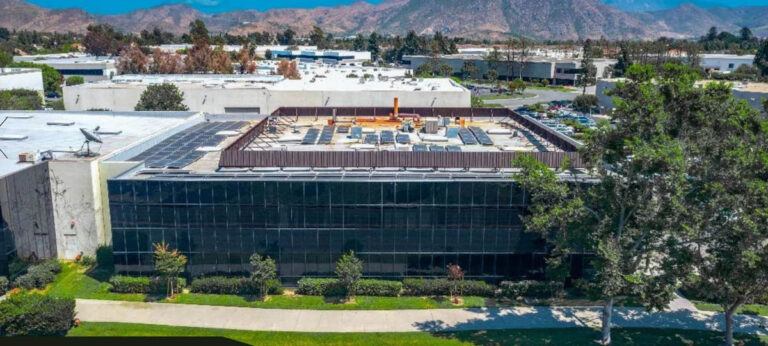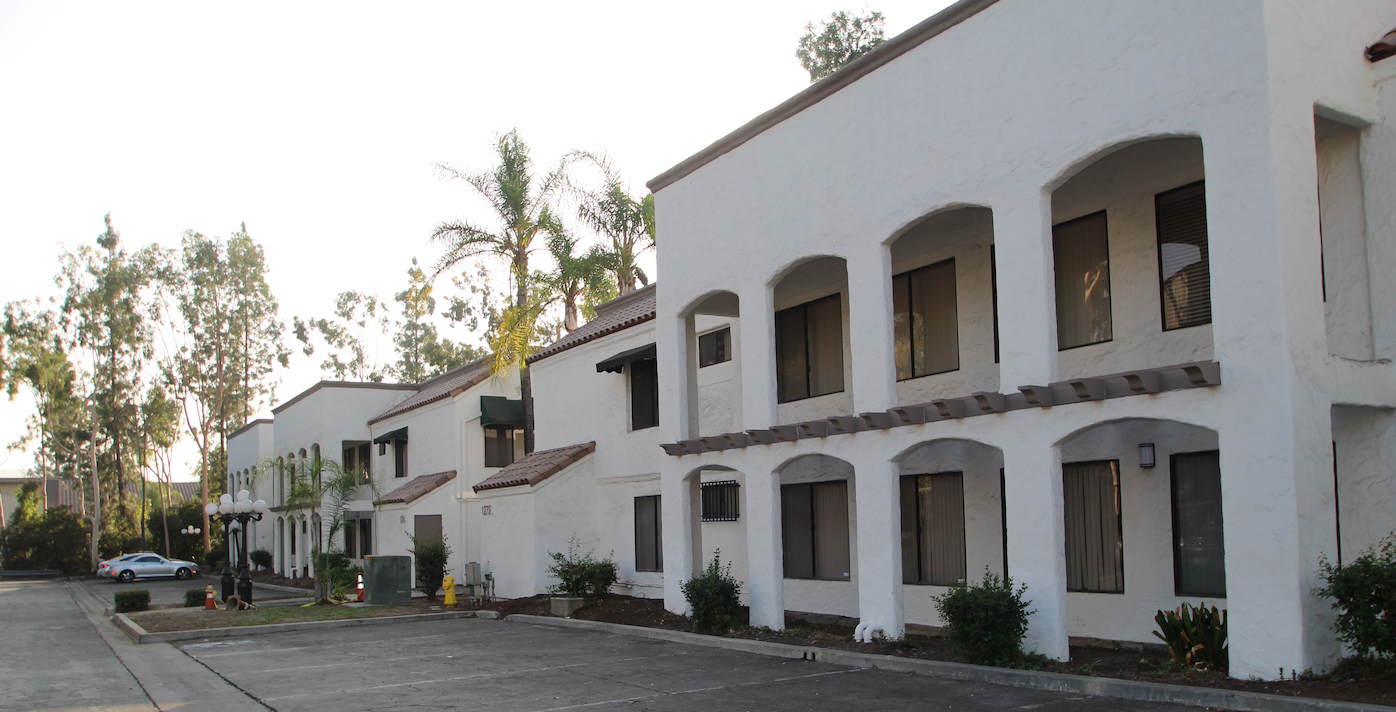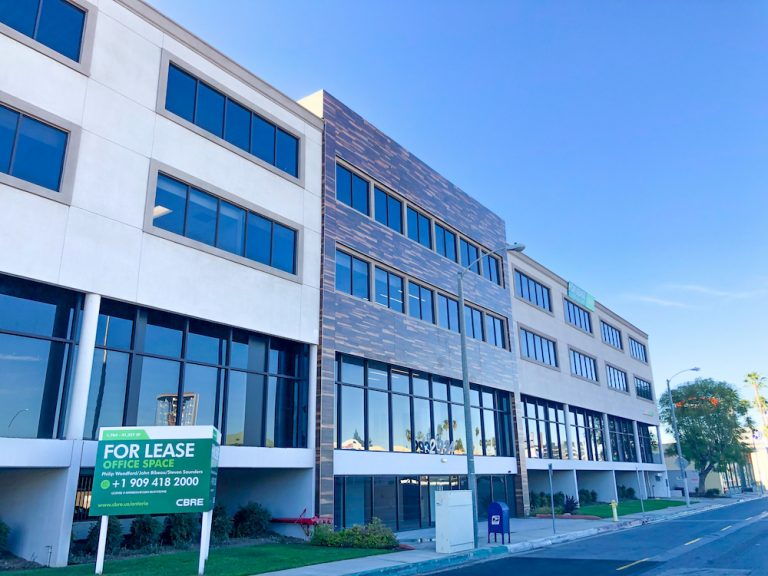
Value-add real estate is the strategy of buying a property that is underperforming, fixing the reason it underperforms, and creating value in the process. It sits between buying a fully leased building and taking on ground-up development, and it is the strategy Quest Capital Partners has used across more than twelve completed projects in Southern California, Texas and Arizona.
If you are new to how these investments are owned and structured, our guide to what a real estate syndication is covers that first. This article picks up where it leaves off.
The idea is simple to say and harder to execute. This article covers the actual mechanism, including the arithmetic, because the arithmetic is where the strategy either works or falls apart.
Where value-add sits on the risk spectrum
Commercial real estate strategies are usually sorted into four categories. Knowing which one you are looking at tells you most of what you need to know about the risk.
- Core. A well-located, fully leased building with strong tenants on long leases. Low risk, modest returns. You are buying an income stream.
- Core plus. Mostly stabilized with some room to improve. A few leases rolling, some light capital needed.
- Value-add. The property has a specific, fixable problem. Vacancy, below-market rents, deferred maintenance, weak management, an outdated configuration. Moderate risk, and returns depend on execution.
- Opportunistic. Heavy repositioning, ground-up development, or a distressed situation. Highest risk, and the widest range of outcomes.
The distinction that matters is where the return comes from. In core, it comes from rent that already exists. In value-add, a large portion of the return comes from rent that does not exist yet and has to be created.
How value actually gets created
Commercial property is valued on the income it produces. That single fact drives everything else.
The formula the entire industry runs on is:
Property value = Net operating income divided by the cap rate
Net operating income, or NOI, is the annual income the property generates after operating expenses but before debt service. The cap rate is the yield buyers in that market are willing to accept, and it is set by the market rather than by the owner.
Because value is NOI divided by cap rate, raising NOI raises the value of the building by a multiple of the increase. At a 6 percent cap rate, every additional dollar of annual NOI adds close to seventeen dollars of value. That multiplier is the entire engine of value-add investing, and it is why operators focus obsessively on income rather than on cosmetics.
This is sometimes called forced appreciation, to distinguish it from market appreciation. Market appreciation is what happens when values rise around you and you happen to own something. Forced appreciation is what happens because of work you did. One is luck. The other is a business plan.
The levers that raise NOI
- Filling vacancy. The most direct lever. A building at 70 percent occupancy taken to 95 percent adds income without adding much expense.
- Marking rents to market. Properties held for a long time by passive owners often carry rents well below what comparable space commands. Rolling leases to market rates raises income with no physical work at all.
- Restructuring leases. Moving tenants toward triple net structures shifts operating costs and improves the income the owner keeps.
- Cutting expenses. Re-bidding service contracts, correcting tax assessments, fixing utility inefficiencies. Less glamorous, and it flows straight to NOI.
- Physical improvements that support higher rents. Roof, parking, lighting, loading, signage, unit finishes. The improvement is only worth doing if the market pays for it.
- Reconfiguring the space. Dividing a large vacant box into smaller suites, for example, when smaller units lease faster and at higher rates per square foot.
A worked example
The following is illustrative only. It uses invented round numbers to show the mechanism, and it is not a Quest deal or a projection of any kind.
Suppose a multi-tenant industrial building is acquired for $10,000,000. It is 70 percent leased, rents on the existing leases are below market, and the roof and parking lot need work. In-place NOI is $550,000, which is a 5.5 percent yield on the purchase price.
The business plan calls for $1,200,000 of capital: roof replacement, parking and lighting, and improvements to ready the vacant suites. Over roughly three years the vacant space is leased and expiring leases roll to market rents. Stabilized NOI reaches $850,000.
Now apply the formula. If comparable stabilized buildings trade at a 5.75 percent cap rate:
- Value at sale: $850,000 divided by 0.0575 = $14,782,609
- Total basis: $10,000,000 purchase plus $1,200,000 capital = $11,200,000
- Value created before selling costs, financing and fees: about $3,580,000
A $300,000 increase in annual income produced roughly $3.58 million of value. That is the multiplier doing the work.
The same example when things go against you
This is the part most articles about value-add investing leave out, and it is the part worth understanding.
Cap rates are set by the market, not by the operator. If interest rates rise during the hold period and buyers demand a 6.25 percent yield instead of 5.75 percent, the same $850,000 of NOI is worth $13,600,000 rather than $14,782,609. The execution was identical. Roughly $1.18 million of value disappeared for reasons entirely outside the operator’s control.
Now compound that with partial execution. If leasing runs slower than planned and NOI reaches only $750,000 at that same 6.25 percent cap rate, the property is worth $12,000,000 against an $11,200,000 basis. After selling costs and fees, that deal returns close to nothing.
Nothing catastrophic happened in that scenario. Rates moved and leasing was slow. Both are ordinary. This is why the purchase price and the debt structure matter so much: they determine how much room a deal has to absorb an unremarkable amount of bad luck.
What value-add is not
The term gets used loosely, so it is worth being clear about what does not qualify.
It is not buying and waiting. Purchasing a stabilized building and hoping the market rises is a bet on cap rate compression, not a value-add strategy. It may work. It is not the same thing.
It is not renovation for its own sake. Money spent on improvements that the market will not pay more for is money spent, not value created. Every dollar of capital should trace to a specific expected increase in income.
It is not a fixed formula. Every building underperforms for its own reason. The work is diagnosing that reason accurately before closing, which is why underwriting matters more than any other part of the process.
Why we focus on class B and C properties in infill locations
Quest targets industrial, multifamily and commercial land assets, generally in the five to fifty million dollar range, concentrated in infill submarkets across the Western United States. That focus is deliberate.
Class A institutional assets are efficiently priced and heavily competed for by buyers with a lower cost of capital. There is very little to fix, which means very little to add. Class B and C properties in established locations are different. They are frequently owned by long-term private owners, under-managed, carrying below-market rents, and too small to attract institutional capital while being too large for most individual buyers. That gap is where mispricing lives.
Infill matters for a separate reason. Well-located older industrial buildings sit on land that is difficult or impossible to replicate. New supply cannot easily be built next door, which supports rents over time in a way that a building in a wide open development corridor does not enjoy.
You can review our investment criteria and look through completed projects to see how this has been applied.
Why this matters in the current market
Conditions today reward disciplined underwriting more than they reward optimism.
In the Southern California industrial market, vacancy stood at 7.3 percent in the second quarter of 2026, with average asking rents down 4.7 percent year over year and sale prices down 21.7 percent to roughly $232 per square foot, according to NAI Capital’s Q2 2026 report. At the same time, the construction pipeline contracted sharply, down 32.1 percent year over year.
Read those numbers together and the picture is a market working through an adjustment while future supply thins out. For an operator underwriting to today’s rents rather than to hoped-for rents, softer pricing on acquisitions and a shrinking pipeline of competing space is a more constructive setup than it looks from the headline numbers. It also means anyone underwriting a deal on the assumption that rents climb steadily from here is making an assumption the market is not currently supporting.
Frequently asked questions
What is value-add real estate?
Value-add real estate is a strategy of acquiring an underperforming commercial property, correcting the specific problem limiting its income, and increasing its value in the process. The problem is usually vacancy, below-market rents, deferred maintenance or weak management.
How does value-add real estate create returns?
Commercial property value equals net operating income divided by the market cap rate. Because of that relationship, each dollar of added annual income increases the property’s value by a multiple, often fifteen to twenty times at prevailing cap rates. Returns come from raising income, with the sale converting that increase into realized value.
What is the difference between value-add and opportunistic?
Value-add properties generate income from day one and have an identifiable, fixable problem. Opportunistic deals involve heavier repositioning, ground-up development or distressed situations, often with little or no income during the work. Opportunistic carries higher risk and a wider range of outcomes.
How long does a value-add business plan take?
Most take roughly three to five years. Leasing vacant space, completing improvements and rolling existing leases to market rents all take time, and a property generally needs a period of stabilized operations before buyers will pay a stabilized price for it.
What is forced appreciation?
Forced appreciation is an increase in property value produced by the owner’s own actions, specifically by raising net operating income, rather than by general market movement. It is the defining feature of value-add investing because it does not require the market to cooperate.
What are the main risks in a value-add deal?
Cap rate expansion between purchase and sale, leasing that takes longer than underwritten, construction costs running over budget, interest rate movement affecting both financing and exit pricing, and tenant credit problems. Most disappointing outcomes come from a combination of ordinary setbacks rather than one dramatic event.
Is value-add real estate a good investment?
It depends almost entirely on the price paid, the debt used and the operator executing the plan. The strategy itself is sound and well established. Whether a particular deal is a good investment is a question about that specific deal, and it deserves a specific answer rather than a general one.
Related reading
- What is a real estate syndication?. How these investments are structured, who does what, and how investors get paid.
- Car wash investing in Southern California. How the same value-add logic applies to car wash real estate.
Where to go from here
If you are new to this asset class, our guide to what a real estate syndication is covers the ownership structure that sits around the strategy described here, and how the process works explains what participating actually involves.
Quest Capital Partners publishes a monthly market perspective covering industrial and multifamily conditions across Southern California, Texas and Arizona, written for people evaluating this asset class. You can subscribe without creating an account. Questions are welcome at investments@quest-capital.com or 818-501-8059.
This article is provided for educational purposes only and is not an offer to sell or a solicitation of an offer to buy any security. The example above is hypothetical, uses invented figures for illustration, and does not represent any actual or projected investment performance. Real estate investments involve substantial risk, including the potential loss of principal. Consult your own financial, legal and tax advisors before making any investment decision.