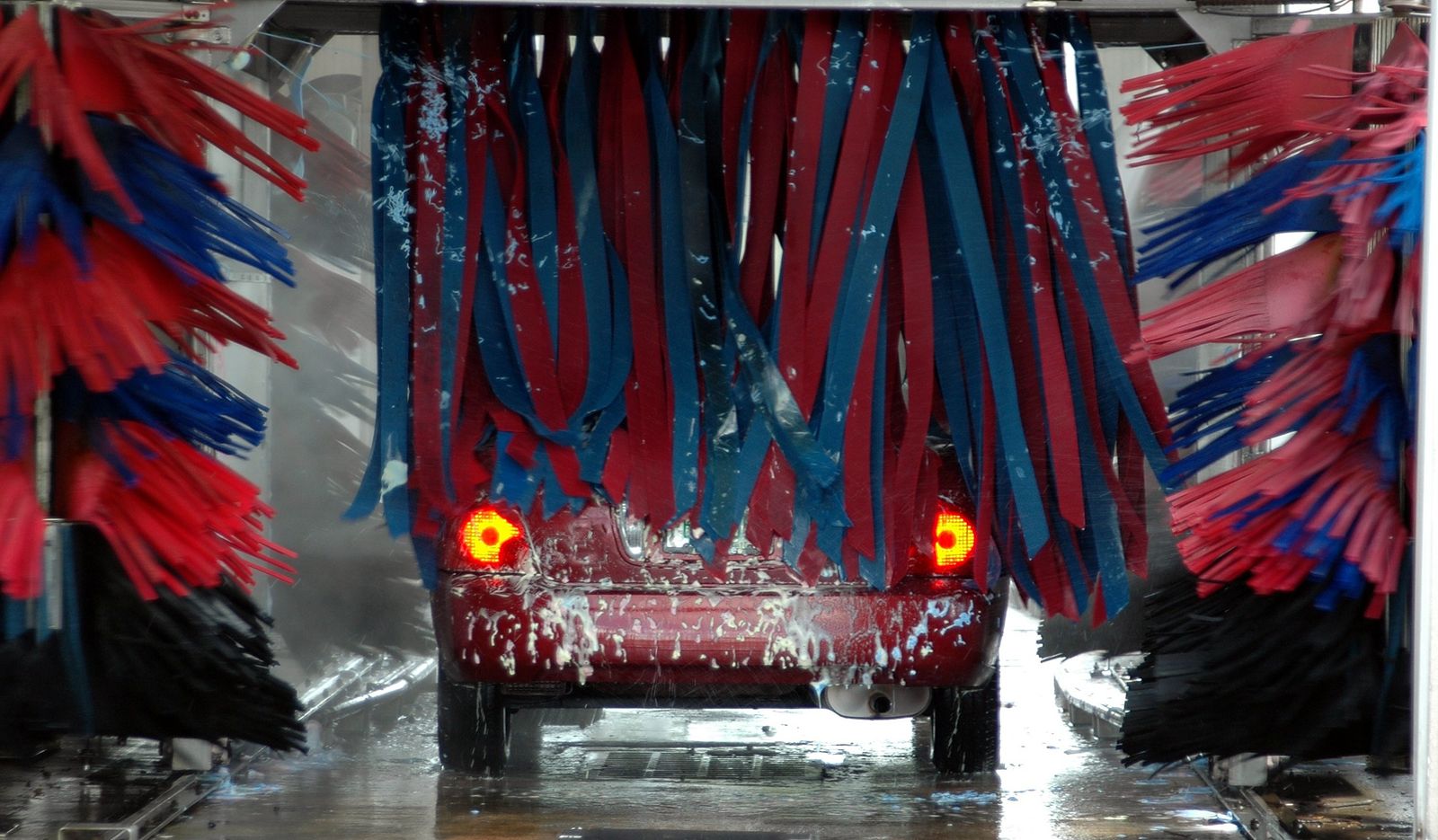
Ten years ago, most real estate investors thought of a car wash as a small local business, not an asset class. That has changed. Private equity firms have spent the last several years buying car washes by the hundreds, and in May 2026 Mister Car Wash, one of the largest operators in the country, was taken private in a $3.1 billion deal by Leonard Green & Partners.
At Quest Capital Partners, we have spent more than twenty years buying and operating commercial real estate in Southern California, and car wash real estate has become a growing part of how we think about the region. This article explains why investors are paying attention, why Southern California in particular is interesting right now, and what can go wrong.
Why car washes became an institutional asset
Three changes turned car washes from a fragmented, cash-heavy local business into something large investors will underwrite.
Memberships turned a car wash into a subscription business
The modern express car wash sells monthly unlimited-wash memberships, billed automatically to a card and recognized by a license plate camera at the entrance. That model changed the economics. Instead of depending on who drives by on a sunny Saturday, a well-run site has a base of recurring monthly revenue that shows up regardless of the weather.
The difference shows in the numbers. Across the industry, member revenue grew 10.6 percent year over year in the first quarter of 2026 while retail single-wash revenue fell 3.3 percent, according to Raymond James’ Spring 2026 Car Wash Insight. The customers who matter most are the ones on a subscription.
Automation cut labor
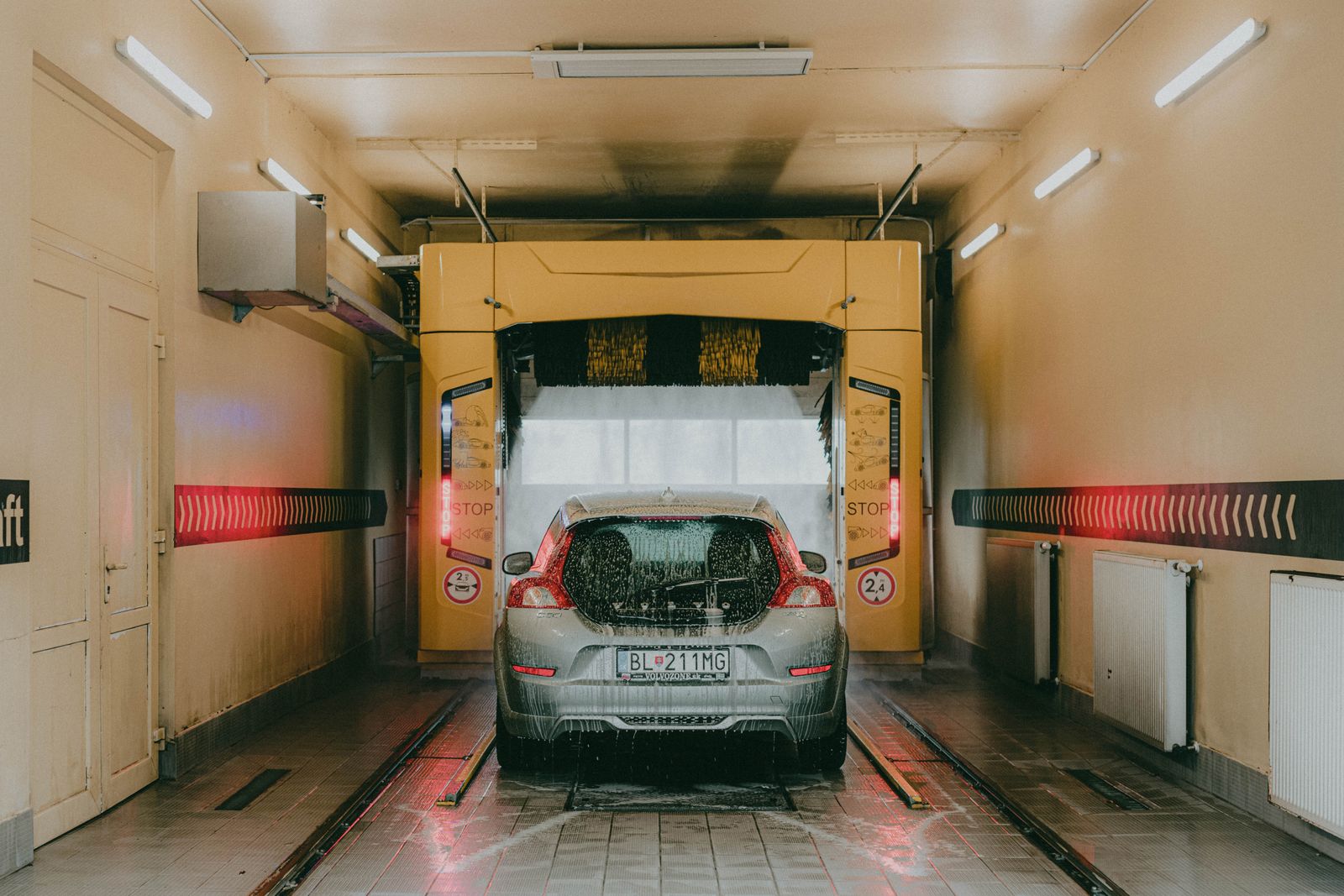
An express exterior tunnel is mostly a conveyor, equipment and a pay station. Sites that once needed a large crew for towel drying and hand prep can now run with a small team. Industry analysis puts mature express sites at roughly 8 to 15 full-time employees, with four-wall margins well above most retail businesses when the site is performing.
Drivers stopped washing their own cars
About 79 percent of U.S. drivers now use a professional car wash, up from roughly half in the mid-1990s, according to a July 2026 industry review by MMCG Invest. Water conservation rules in many California cities also limit how residents can wash cars at home, such as requiring a shut-off nozzle on any hose, which nudges more of that demand toward professional washes.
Just as important is what a car wash is not exposed to. It cannot be replaced by e-commerce, and it cannot be done remotely. The customer has to bring the car to the property. That is the quality that makes the real estate underneath it interesting.
Why Southern California, specifically
Car wash investing is not equally attractive everywhere. In parts of the country the problem right now is too many new car washes, not too few.
Much of the Sun Belt overbuilt
Most new express car wash construction over the past five years went to fast-growing Sun Belt markets. The same MMCG review identifies corridors around Phoenix, Orlando, Jacksonville, San Antonio and the Dallas-Fort Worth suburbs as oversupplied, and points to dense West Coast urban areas as better positioned. When a new tunnel opens a mile from an existing one, both sites fight over the same members.
Building a new car wash here is hard
Southern California works differently. Several things limit how many new car washes can be built:
- Land. A modern express tunnel needs a well-located pad with room for cars to queue. In infill Southern California, those sites are scarce and expensive, and they compete with every other retail and housing use.
- Local approvals. Car washes typically need a conditional use permit, and many cities have become openly skeptical of them. Pico Rivera adopted a temporary car wash moratorium in 2021, with the city manager noting that car washes do not generate sales tax. Hemet adopted a moratorium in 2023 and in 2024 amended its zoning code to stop allowing new car washes in its commercial and manufacturing zones.
- Water rules. Under California Water Code section 10951, any in-bay or conveyor car wash permitted and built after January 1, 2014 must recycle at least 60 percent of its wash and rinse water or use recycled water from a supplier for at least 60 percent. That adds cost and complexity to every new project.
- Labor rules. California requires car wash businesses to register with the Labor Commissioner every year, which adds another layer that new entrants have to work through.
Each of these makes new supply slower and more expensive. For someone who already owns a well-located, permitted car wash, the same barriers protect the site from new competition. That is the same logic that makes infill industrial valuable, which we cover in our article on how value-add real estate creates returns.
The demand base is already here
Southern California is one of the most car-dependent large regions in the country, with long commutes, a dry climate that leaves dust and grime on vehicles, and millions of registered cars. The demand does not have to be created. The question is whether a given site captures it well.
The value-add angle: older sites and conversions
Many Southern California car washes are older full-service or flex-service sites, often owned by the same family for decades. Some run on cash, have no membership program and use dated equipment. That is a familiar setup for a value-add investor: a well-located property whose income is limited by how it is being run.
The typical business plan looks like this:
- Acquire an existing, permitted site in a trade area where new competition is hard to build.
- Upgrade the tunnel equipment, pay stations and license plate recognition.
- Launch or rebuild a membership program so a larger share of revenue recurs every month.
- Tighten operations: staffing, chemical costs, maintenance and pricing tiers.
Because commercial property is valued on income, each dollar of stabilized annual income can support many dollars of value. The difference with a car wash is that the business and the real estate are closely tied, so operating skill matters as much as the property itself.
The tax side: cost segregation and bonus depreciation
Car washes are unusual among commercial properties because so much of what is built on the land is equipment and site work rather than building. Tunnel conveyors, wash equipment, water reclamation systems, pay stations, canopies, paving and lighting can often be separated through a cost segregation study and depreciated over 5, 7 or 15 years instead of the standard 39 years for commercial buildings.
The One Big Beautiful Bill Act, signed July 4, 2025, restored 100 percent bonus depreciation for qualifying property acquired and placed in service after January 19, 2025, with no scheduled phase-down. Qualifying short-life property can be deducted in the first year rather than spread over time. Industry sources, including Professional Carwashing & Detailing, report that a large share of a car wash’s improvement cost can qualify for accelerated treatment.
This is the “write-off” people talk about, and it is real. Two caveats matter a lot:
- Passive loss rules apply. For most investors in a syndication, depreciation is a passive loss. It can generally offset passive income, such as income from other real estate investments, but not wages or business income unless the investor qualifies as a real estate professional or meets other exceptions. What it does for any one person depends on their own tax situation.
- Depreciation is usually recaptured. When the property is sold, part of the depreciation taken can be taxed back. Accelerated depreciation mostly shifts when taxes are paid. It rarely eliminates them.
The tax benefits are a good reason to prefer one asset over a similar one. They are not a good reason to buy a car wash that does not work as a business. Anyone considering this should talk to their own CPA.
What can go wrong
We think car wash real estate is interesting. It is not low risk, and anyone evaluating it should be clear about the downside.
- Saturation. A new tunnel nearby can take members and pressure prices. Even in a supply-constrained region, the specific trade area matters more than the regional story.
- Member churn. Raymond James reports average monthly membership churn of about 4.5 percent in early 2026, and churn rose from the prior year. Memberships only work if the site keeps replacing the members it loses.
- Operator dependence. A car wash is an operating business. Poor management, broken equipment or a bad customer experience show up in revenue quickly.
- Costs. Water, power, chemicals and California labor costs all move, and none of them are fully under the owner’s control.
- Weather. Memberships soften the effect, but extended rainy periods still reduce traffic.
- Specialized use. A car wash building is hard to convert to another use, so the value of the real estate is closely tied to the success of the wash.
How we evaluate car wash real estate
Our approach is the same one described in our investment criteria: start with the real estate. We look for existing, permitted sites in established Southern California trade areas where a new competitor would be hard to approve, with room to improve operations or add a membership program. We look at what the land would be worth if the car wash were gone, and we underwrite to today’s volumes rather than hoped-for ones.
If you are newer to this kind of investing, our guide to how a real estate syndication is structured explains how investors typically participate in deals like these, and how the process works covers what being a Quest investor involves.
Frequently asked questions
Are car washes a good investment?
Car washes can be a strong investment when the site is in a good trade area with limited competition, runs a membership program and is well operated. They are an operating business tied to real estate, so results depend heavily on location and management. They are not a passive, set-and-forget asset.
Why are investors buying car washes?
Investors are drawn to recurring membership revenue, relatively low labor needs at automated sites, demand that cannot move online and meaningful depreciation benefits. Private equity has consolidated thousands of locations, including the $3.1 billion take-private of Mister Car Wash completed in May 2026.
Why invest in car washes in Southern California?
Southern California has strong car-dependent demand and high barriers to new supply, including scarce land, conditional use permits, city moratoriums and state water recycling requirements for new washes. Those barriers protect existing, well-located sites from new competition, unlike some overbuilt Sun Belt markets.
What is the car wash membership model?
Customers pay a monthly fee, usually charged automatically to a card, for unlimited washes. A camera reads the license plate at entry. Memberships create recurring revenue that is less dependent on weather and on drive-by traffic.
How does cost segregation work for a car wash?
A cost segregation study separates equipment, site work and other components from the building so they can be depreciated over 5, 7 or 15 years instead of 39. With 100 percent bonus depreciation restored for property placed in service after January 19, 2025, qualifying components can often be deducted in the first year. Passive loss rules and depreciation recapture still apply.
Can car wash depreciation offset my W-2 income?
Usually not for a passive investor. Depreciation from a passive investment generally offsets only passive income, unless the investor qualifies as a real estate professional or meets another exception. A CPA can tell you how it applies to your situation.
What are the biggest risks in car wash investing?
The biggest risks are new competition in the trade area, membership churn, weak operations, rising water, labor and utility costs, and the fact that a car wash building is hard to convert to another use if the business fails.
Related reading
- How value-add commercial real estate creates returns. The math behind raising income and value.
- What is a real estate syndication? How these investments are structured and who does what.
Stay informed
Quest Capital Partners publishes a monthly market perspective covering Southern California real estate, including the car wash sector, written for people evaluating these asset classes. You can subscribe without creating an account. Questions are welcome at investments@quest-capital.com or 818-501-8059.
This article is provided for educational purposes only and is not an offer to sell or a solicitation of an offer to buy any security. It does not describe any specific Quest Capital Partners investment. Nothing here is tax advice; tax outcomes depend on individual circumstances, and you should consult your own tax advisor. Real estate investments involve substantial risk, including the potential loss of principal.